
How ceramic SLA enables complex, high-performance parts from development to industrial production
Vat photopolymerization has become a key process for manufacturers that need advanced ceramic parts with complex geometries, fine details and high-quality surfaces. Often described as ceramic stereolithography or ceramic SLA, the technology combines the design freedom of additive manufacturing with the functional properties of technical ceramics after debinding and sintering. It is particularly relevant when conventional forming or machining would require costly tooling, extensive material removal or multiple assembled components
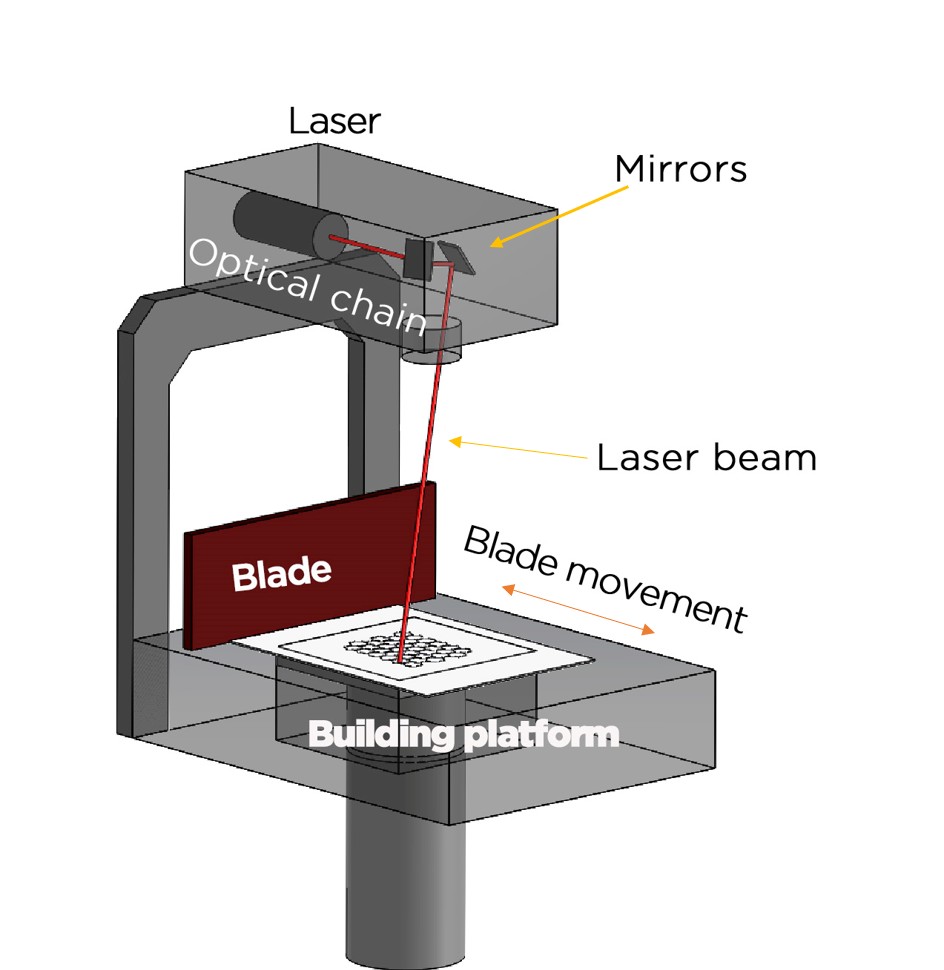
Vat photopolymerization is an additive manufacturing process in which a light source selectively cures a photosensitive formulation. For ceramic applications, the formulation is a slurry containing a mix of fine ceramic powder and photopolymer resin. The printer creates a green part, which then undergoes cleaning, debinding and sintering to become a dense ceramic component for the most demanding applications. 3DCeram’s slurries contain 50–60% ceramic load content, supporting the shrinkage control.
The complete workflow starts with a CAD model. The geometry is oriented, supported when necessary and scaled to compensate for shrinkage. During printing, a laser cures each layer. The green part is then cleaned carefully before the organic is removed during debinding step. Finally, sintering consolidates the ceramic microstructure. Optional grinding, lapping or polishing may be used when a specific dimensional tolerance or surface condition is required. Typical layer thicknesses range from 25 to 100 µm.
Printing is only one stage of ceramic additive manufacturing. Debinding must remove the organic system without creating internal pressure that could cause cracks or deformation. Sintering then produces the final density and properties, but also generates dimensional shrinkage. The typical linear shrinkage is approximately 15-25%, depending on the material. For industrial users, reliable dimensional compensation therefore depends on calibrated material data, stable printing conditions and controlled furnace cycles.
Fine features, smooth surfaces and design freedom
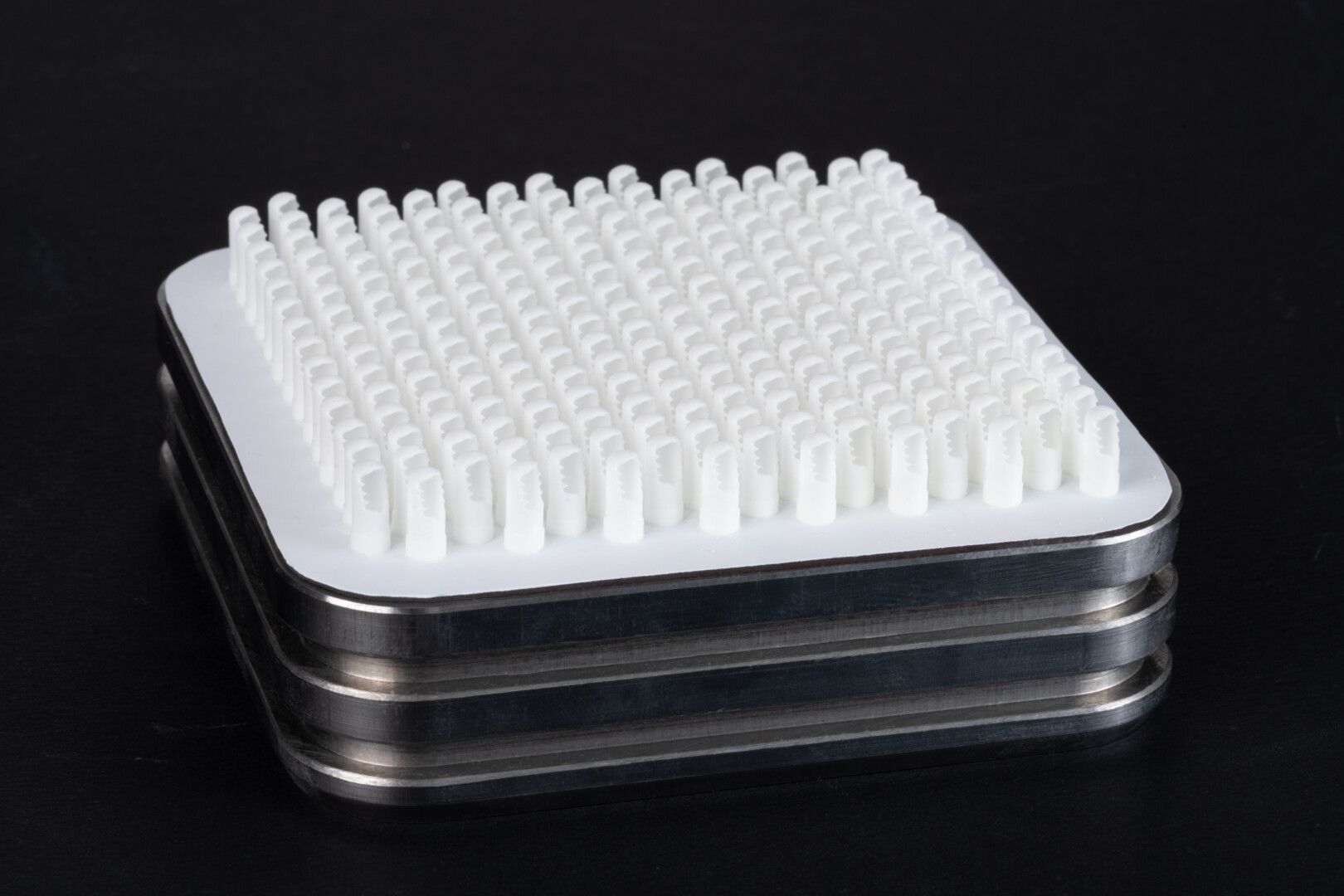
Ceramic vat photopolymerization is well suited to parts that combine fine features, thin walls, internal channels, lattices or intricate flow paths. The process can deliver smoother as-printed surfaces and finer geometric detail than powder-based or extrusion-based ceramic AM methods. This capability supports near-net-shape production and may reduce the amount of finishing required on complex surfaces. The smallest printable feature size in the XY plane can reach 50–150 µm, with as-sintered surface roughness typically around Ra 1–2 µm.
The technology also enables engineers to reconsider the part itself. Internal channels can be integrated into thermal or fluid-management components; porous or lattice regions can be added; and several functions may be consolidated into one printed geometry. These benefits are most valuable when complexity creates performance, reduces assembly or eliminates tooling rather than when the component is simple and already economical to press or mold.
A flexible route from R&D to production
Because the process starts from a digital file, designs can be revised without manufacturing a new mold. This makes ceramic SLA relevant for R&D, design qualification, prototypes, bridge production, short series and high-mix manufacturing. Productivity is influenced by build utilization, part height, furnace capacity, cleaning time and yield. Our comprehensive product range provides a smooth and scalable path from prototyping to industrial production.
C101 EASY FAB: development with a direct scale-up path
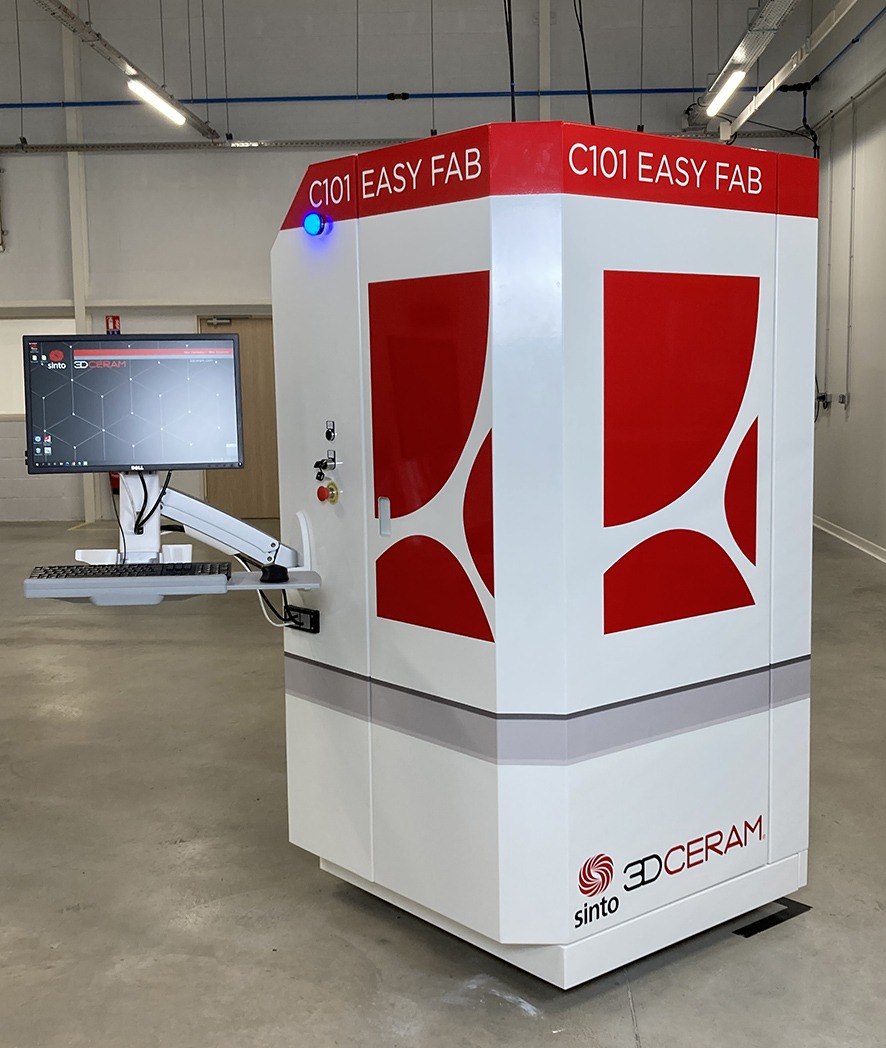
The C101 EASY FAB illustrates how the same ceramic SLA approach can support both development and industrialization. Its 100 x 100 x 150 mm build platform is intended for developing and producing parts before scaling them to larger 3DCeram systems. The machine uses a one-piece granite structure combining mechanical and optical elements for long-term stability. Slurry delivery is controlled through a peristaltic pump and a pressurized material tank that supplies only the quantity required for the run. Real-time production monitoring and the availability of 3DCeram's CERIA system complete this development-to-production positioning. The machine can start a print with as little as 10 mL of ceramic slurry.
C1000 FLEXMATIC: larger builds and semi-automated production
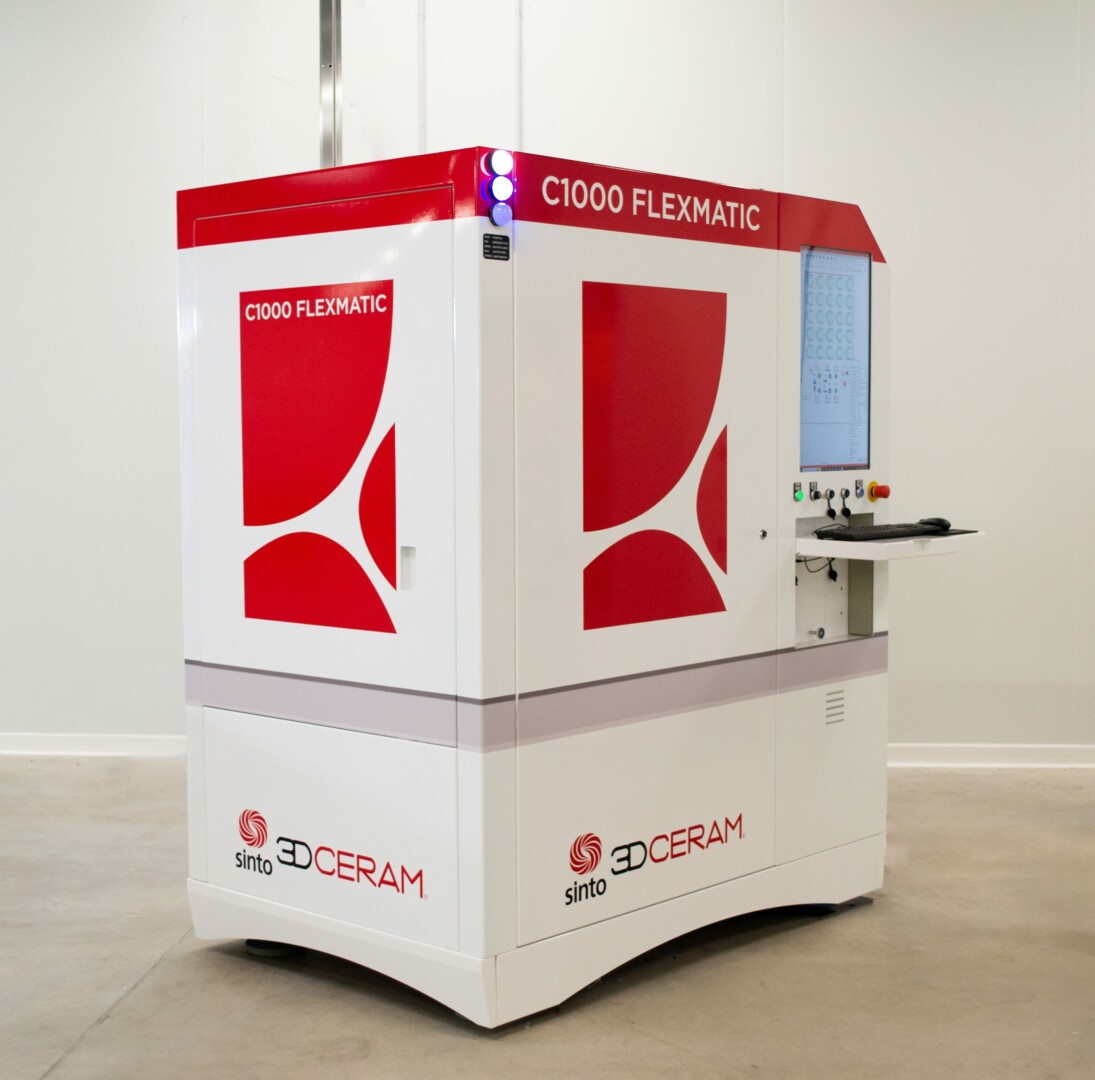
For larger parts or series production, the C1000 FLEXMATIC provides a 320 x 320 x 200 mm build platform and can be configured with two or three lasers according to the targeted productivity level. Its removable tank is designed to integrate printed-part processing into a semi-automated line. The machine also has an automated recycling of uncured material and a semi-automated cleaning step. Using top-down SLA, the system is designed to require few or no supports, simplifying post-print operations. The 45 L pressurized material tank provides extended printing autonomy, enabling longer uninterrupted production runs.
Together, the C101 EASY FAB and C1000 FLEXMATIC show a practical scale-up logic: establish the material, geometry and process on a compact platform, then transfer the project to a larger industrial system while retaining a related material-feeding and process philosophy.
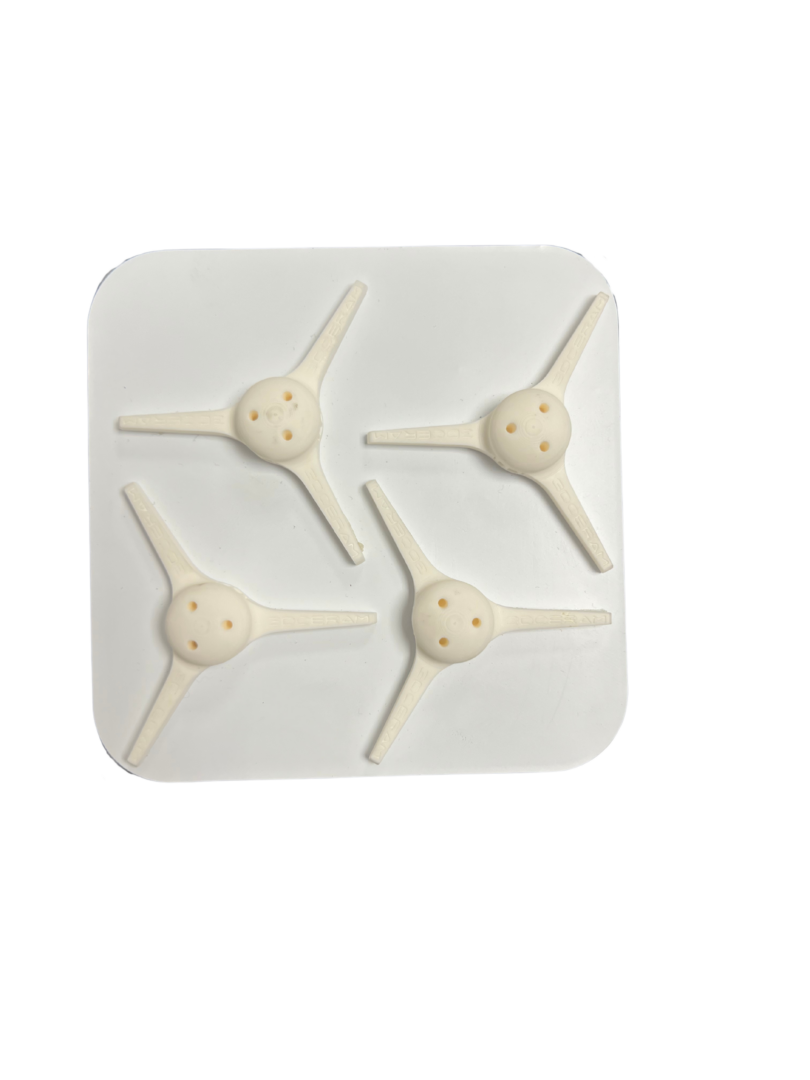
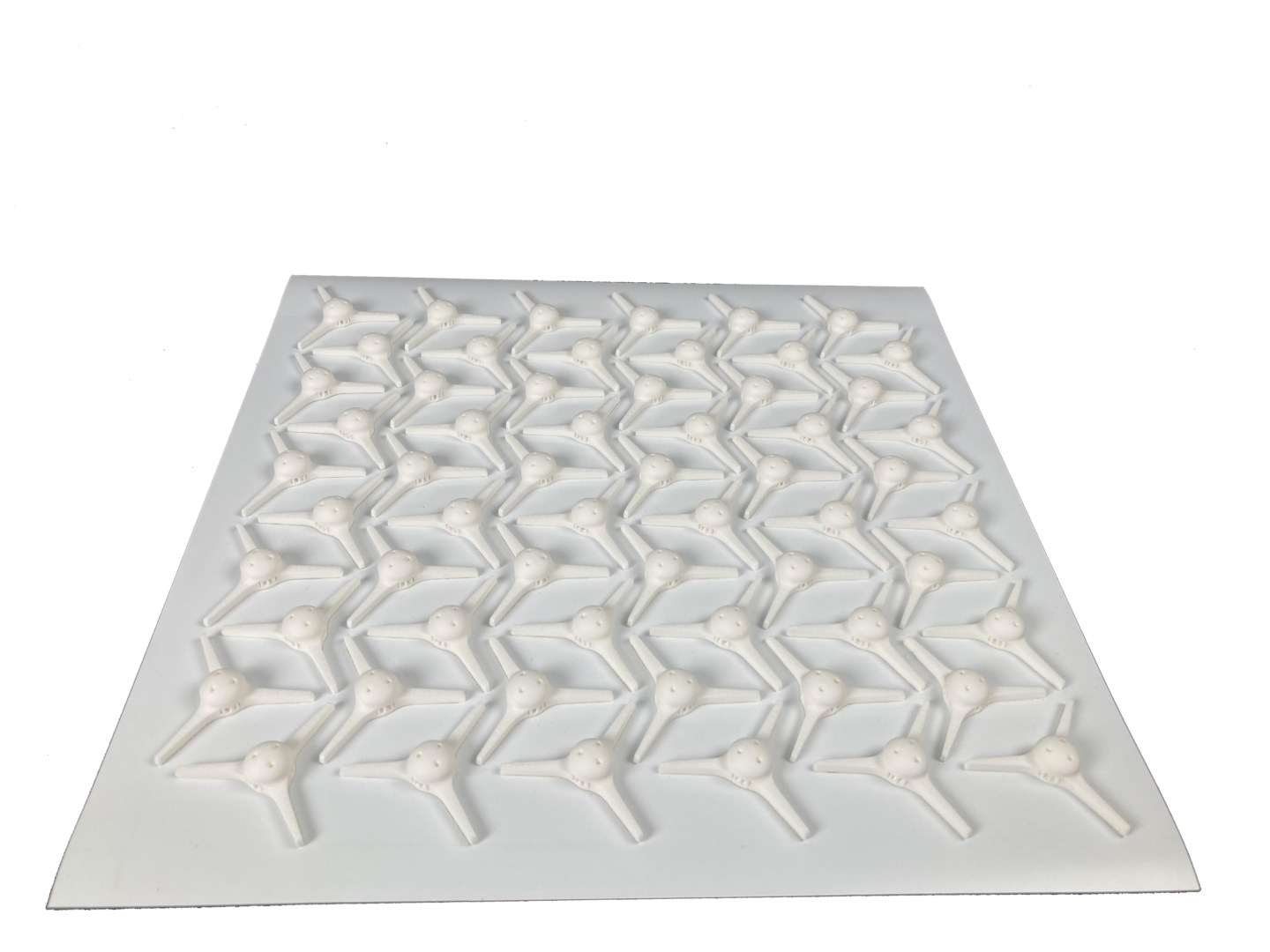
Vat photopolymerization is not a push-button substitute for conventional ceramic processing. Green parts remain fragile during cleaning, support removal and transfer. Non-uniform wall thicknesses can produce differential shrinkage and warpage, while enclosed volumes may trap resin or gases. Designs should therefore avoid abrupt section changes, account for drainage and debinding, and use appropriate sintering supports when needed.
Material behavior is equally important. Density and mechanical properties can approach those of conventionally formed ceramics when the formulation and process are optimized, but pores, microcracks, surface damage or non-uniform thermal treatment can reduce performance. Safety-critical applications may require conservative design factors, extensive testing, traceability and formal qualification.
The strongest applications are those where advanced ceramic properties and geometric complexity are both essential. In semiconductor manufacturing, ceramic components can serve in wafer handling, etching, deposition and high-temperature environments. In aerospace and New Space, potential uses include scientific instruments, ceramic antennas and supports, optical components and thrusters. Green-hydrogen systems can benefit from corrugated or channel-rich geometries that increase exchange area and withstand demanding pressure conditions.
Biomedical applications include dental, orthopedic and reconstructive components, particularly when patient-specific geometry or controlled porosity is required. Other relevant areas include wear-resistant nozzles, seals, high-temperature fixtures, chemically resistant tooling and ceramic parts for thermal or electrical management. 3DCeram's material portfolio includes oxide and non-oxide formulations such as alumina, zirconia, silica-based material, hydroxyapatite, tricalcium phosphate, cordierite, aluminum nitride and silicon nitride. Suitability must be confirmed for each application and machine configuration.
Material selection is a critical part of ceramic additive manufacturing. Alumina and zirconia offer different combinations of strength, toughness and electrical performance, while technical ceramics such as silicon nitride, aluminum nitride and cordierite are selected for demanding thermal or dielectric environments. The table below summarizes indicative properties of materials available for ceramic vat photopolymerization; the final values depend on the formulation, printing parameters, debinding and sintering cycle.
| Material |
Density (g/cm³) | CTE (ppm/K) | Bending Strength (MPa) | Fracture Toughness (MPa·m½) | Thermal Cond. (W/m·K) | Rel. Permittivity ε_r | Dielectric Strength (kV/mm) | High-Temp Res. |
|---|---|---|---|---|---|---|---|---|
| Alumina (Al₂O₃ 99.8%) | 3.9 | 7–8 | 300–400 | 3–4 | 20–30 | 9–10 | 12–15 | ~1600°C |
| Zirconia 3Y-TZP | 6.0 | 10–11 | 900–1200 | 7–10 | 2–3 | 25–30 | 8–12 | 1000–1200°C |
| ATZ (Al₂O₃–ZrO₂) | 4.1–4.3 | 8–9 | 500–900 | 4–6 | 15–25 | 12–15 | 10–12 | 1400–1500°C |
| Si₃N₄ | 3.2 | 3–4 | 700–1000 | 6–10 | 20–30 | 7–8 | 10–13 | 1200–1400°C |
| AlN | 3.3 | 4–6 | 250–350 | 2–3 | 140–180 | 8–9 | 12–15 | ~800–1000°C |
| Cordierite | 2.5–2.6 | 0–2 | 80–120 | 1–1.5 | 3–5 | 5–6 | 8–10 | 1100–1200°C |
Note: values are indicative and may vary according to material grade, part geometry, orientation, printing parameters and thermal treatment. Please consult 3DCeram Sinto for application-specific material data.
Vat photopolymerization is a strong candidate when the part requires fine detail, internal channels, thin sections, high surface quality or customization, and when eliminating tooling creates clear value. It is less attractive for very simple, high-volume shapes that are already cost-effective to press or injection mold, or for parts that exceed the available build envelope. A realistic business case should include material, printing, cleaning, furnace cycles, inspection, finishing and expected yield.
Ceramic vat photopolymerization connects digital design with the performance of sintered technical ceramics. Its value lies in producing geometries that are difficult to machine or form conventionally while supporting faster iteration and a tooling-free route to small and medium series. Success, however, depends on mastering the complete chain from slurry and printing parameters to debinding, sintering and quality assurance.
To evaluate how this approach could fit a specific component or production roadmap, discover 3DCeram Sinto's C101 EASY FAB and C1000 FLEXMATIC ceramic 3D printing solutions.