
Alumina and zirconia 3Y are both used in technical ceramic 3D printing, but they fit different engineering priorities. Alumina is lighter and offers higher stiffness, hardness, thermal conductivity and electrical resistivity. Zirconia 3Y has much higher reported flexural strength and is used in selected space, dental and other demanding applications. The right choice depends on the finished part, its service environment and the qualified manufacturing process.
3DCeram develops and processes both materials through its 3DMIX formulations, CERAMAKER printers and application support. This lets engineers assess the ceramic, geometry and manufacturing route together.
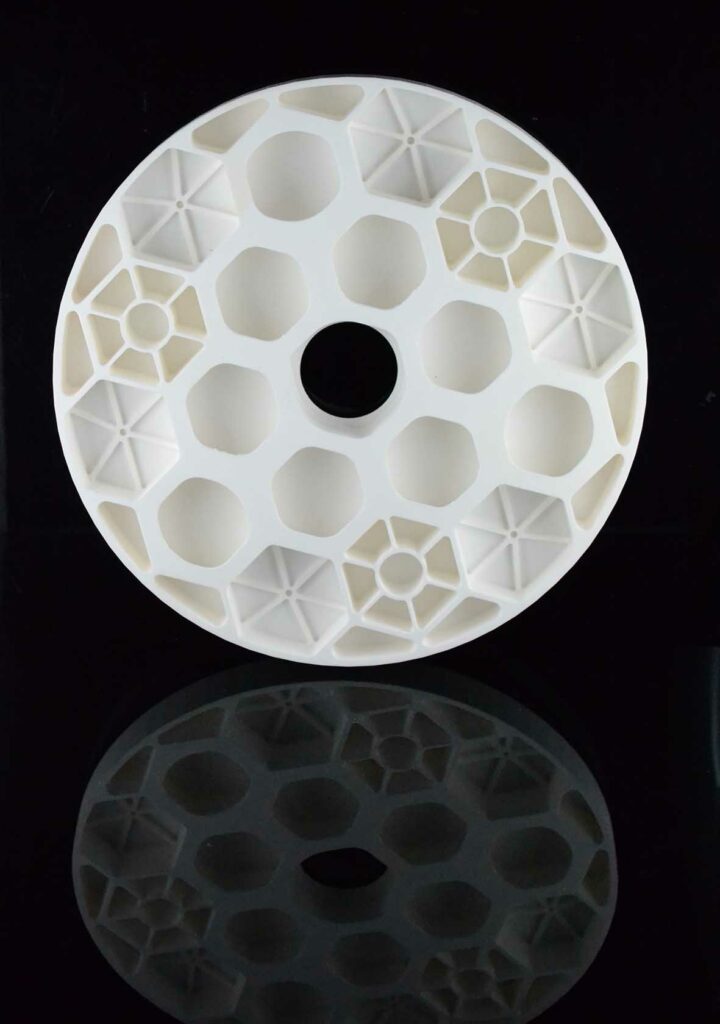
Define the loads, allowable deflection, operating temperature and cycles, chemical exposure, electrical function, mass, critical dimensions, surface finish and interfaces. Then shortlist a grade against those requirements. Material properties describe a ceramic grade, but part performance also depends on geometry and manufacturing conditions.
In SLA, ceramic powder and photosensitive binder form a slurry. Printing produces a fragile green part; cleaning, debinding and sintering produce the final ceramic. Compare properties after sintering, then validate a representative component under its intended service conditions.
The figures below are 3DCeram’s typical reference values for materials processed on its printers. They help shortlist a material, but they are not design allowables.
| Property | Alumina | Zirconia 3Y | What this means for the part |
|---|---|---|---|
| Density (g/cm³) | 3.9 | 5.95 | Lower mass at equal part volume. |
| Four-point flexural strength (MPa) | 300–350 | 950 | Higher flexural strength; not a design allowable. |
| Theoretical Young’s modulus (GPa) | 300 | 200 | Higher stiffness at equal geometry and load. |
| Vickers hardness (GPa) | 16.4 | 12.6 | Higher indentation hardness; validate wear. |
| Thermal conductivity at room temperature [W/(m·K)] | 23.3 | 3.3 | Higher thermal conductivity. |
| Thermal expansion coefficient at 20 °C (10⁻⁶ K⁻¹) | 4.98 | 9.10 | Check thermal mismatch at interfaces. |
Note: Reference values from 3DCeram printer tests are non-contractual. Results vary with formulation, geometry, debinding and sintering. Validate the final part for its intended use. See the 2026 material guide for full data.
Alumina’s lower density, stiffness, high electrical resistivity and thermal conductivity can suit space hardware, sensors, and optical or electrical components. 3DCeram’s qualified application work includes space components in alumina. A published development example is an alumina sensor-housing concept for space and hypersonic service, designed with internal cooling channels. Read the space sensor housing case study.
Zirconia 3Y is a candidate when flexural strength, hardness and wear resistance lead. 3DCeram’s qualified application work also includes space components in zirconia and dental components in zirconia. Its material guide lists zirconia 3Y for dental and orthopedic implants. Qualification applies to a specific grade, part and process; medical devices also require the approvals that apply in their market. Explore 3DCeram’s biomedical applications.
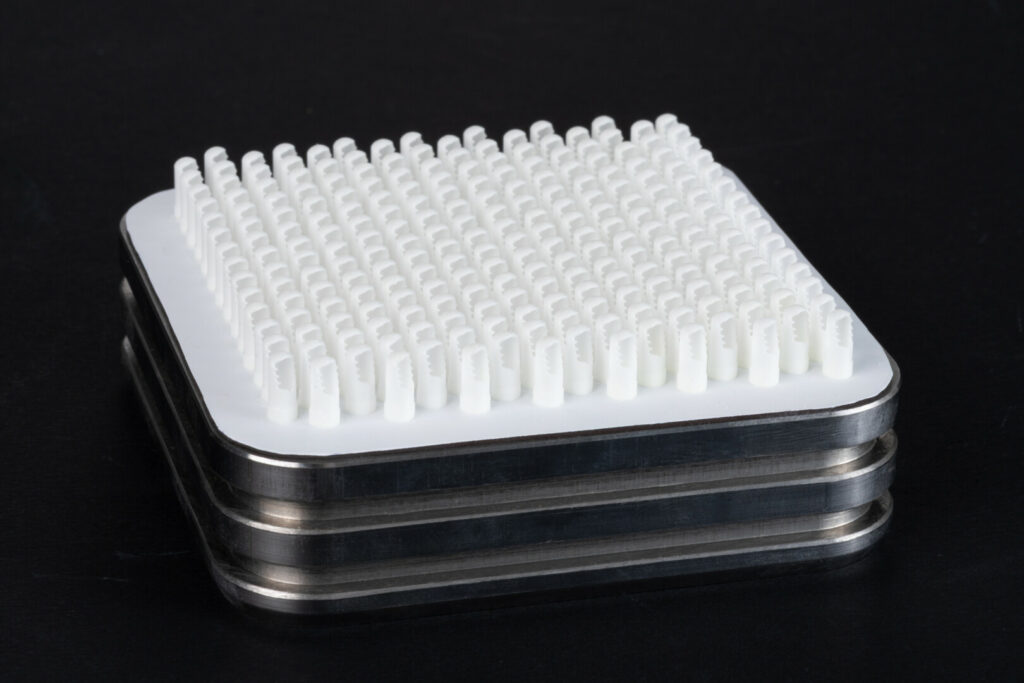
3DMIX includes ready-to-use alumina and zirconia slurries for CERAMAKER systems. For projects with different requirements, 3DCeram can develop formulations on request and define compatible printing and firing parameters. Its material and process teams assess the ceramic alongside the part design, cleaning, debinding and sintering route. Explore the 3DMIX material range.
The broader 3DMIX portfolio includes zirconia 8Y, alumina-toughened zirconia (ATZ), hydroxyapatite, tricalcium phosphate, cordierite, aluminum nitride and silicon nitride. ATZ is a distinct composite of 20% alumina and 80% zirconia.
3DMIX includes ready-to-use alumina and zirconia slurries for CERAMAKER systems. For projects with different requirements, 3DCeram can develop formulations on request and define compatible printing and firing parameters. Its material and process teams assess the ceramic alongside the part design, cleaning, debinding and sintering route. Explore the 3DMIX material range.
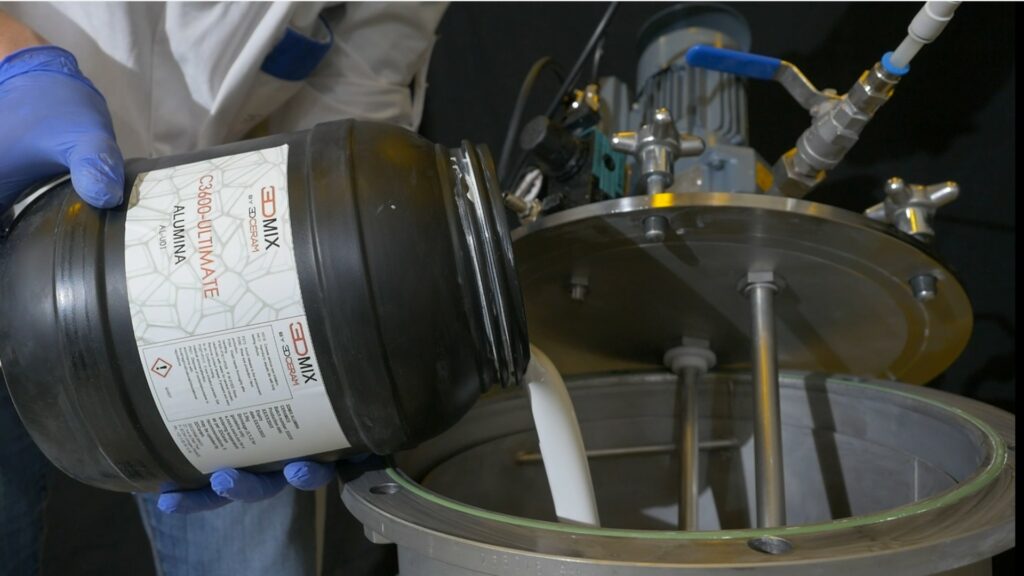
The broader 3DMIX portfolio includes zirconia 8Y, alumina-toughened zirconia (ATZ), hydroxyapatite, tricalcium phosphate, cordierite, aluminum nitride and silicon nitride. ATZ is a distinct composite of 20% alumina and 80% zirconia.
Evaluate alumina when lower mass, stiffness, hardness, heat transfer or electrical insulation are high priorities. Evaluate zirconia 3Y when flexural strength and wear resistance matter, including selected space and dental applications. If the component has several competing requirements, compare the exact formulation and process on a representative finished part.
To discuss a part with 3DCeram, share its CAD file, operating conditions and acceptance criteria. Contact the 3DCeram application team to assess the material, manufacturing route and validation needs.